Honeyheads!
Lucky you, if you love gardens and tend a garden of your own.
Really lucky? You have had a passionate love affair…with a garden. Or many love affairs with many gardens. Public gardens, private gardens, random gardens. Alleyway gardens, country gardens. Cozy gardens, cunning gardens, subtle gardens. Explicit gardens! Enchanted gardens!
Right?
But really, really, lucky? Oh my! Do you get to TOTALLY GEEK OUT with other gardeners?
— and writers and artists and plant enthusiasts and garden industry professionals — in the most beautiful gardens on the continent?
DAMM, gurl.
Last month (September 2023) I got really really lucky.
I had the pleasure to again join a group of writers, influencers, and industry professionals who gather yearly to tour gardens, each time in a new location. The Fling. (#gbfling2023)
I have attended (and even hosted) the regional Midwest flings and this was my second North American (#gardenbloggersfling). Think of a fling as attending a playoff game for garden geeks–you get to get together with many many of your closest friends–friends you know and besties you have not yet met–to do the thing that makes you happy! (I heard quite a few first time flingers saying “I could be best friends with everyone here”–and I felt the same at my first fling: HERE ARE MY PEOPLE!)
Our fling began in Longwood Gardens (#longwoodgardens) in Kennett Square, Pennsylvania (#pennsylvaniafling), Chester County, an hour from Philadelphia (#phillyfling).
Also an hour from where Johnny and I lived on a truck farm as newlyweds so many moons ago. ❤
The 2023 Fling was my first visit since 2006, but I have been visiting Longwood since 1989. Johnny and I always took out-of-town guests to the gardens when we lived nearby (and to the Barnes Collection in Merion. ) At some point, we owned this book in both paperback and hardcover, with printing dates a decade apart. (Book publishing has sure changed!)

OMG, honeyheads! You should go back to Longwood too! the Resources! the Beauty! the People!
By the year 1850, Longwood was already an arboretum, with what may have been the largest collection of trees in North America. It is truly awe-inspiring to witness GIANT specimens of rare and unusual trees.
In 2023, Longwood boasts 1,100 types of trees. I want to hug them all. (Okay, maybe NOT the cockspur Hawthorns.)

Above is a picture from a visit in 2006. Can anyone identify the tree? Barbara Tiffany would almost certainly say that it should have been underplanted with variegated plants. At her gardens at Millefleurs, she told us how important it is– if you are featuring a variegated tree– to surround it with other variegated plants. “MAKE them see it!” she admonished us all. (Then she looked sharply at me and said “You can do this at any scale. If you have 7 variegated plants, plant them all together.”
(Should you speak with Barbara, please let her know that I have been obediently digging up and replanting all of my variegated perennials since I got home.)
Below is a picture of the Oak tree seedling that Johnny and I took home from Longwood in a dixie cup in 2006. Johnny grew it out in root control pots for a few years, then planted it with a fence around it for a decade. Today, our nine year old climbs up it and hides!

Ever since that 2006 visit, too, I have specified an oak sapling on almost new every landscape we install. People sometimes object that oaks “take too long to get big” but I talk them into it. “Watch it grow! Know it will outlast you!” (which another flowering crabapple might not!)
Longwood Gardens
The #pennsylvaniafling began with a behind-the-scenes tour of the growing facilities at Longwood.


Flingers moved in groups, traded from one faculty person to the next as we toured the state-of-the-art the facility. (I wish we had a reel of that! OMG honeyhead Flingers, do we? Anybody?)
The staff was amazingly informed, articulate, entertaining, and passionate.
My main takeaway?
I noticed (we probably all did) a theme. The goal at Longwood is to be nothing less than extraordinary.
At Longwood, beauty is not sufficient. Perfect is not good enough. It is required to push boundaries. To find exquisite balance. To always verge on and not to exclude but also not indulge in (too much) —excess.
To ALWAYS be extraordinary. While also improving. And insistently merging science and art— with art leading the way.
And the thing is, they pull it off. Again and again.

Our host Karl Gercens may be the most enthusiastic horticulturist I have ever met in my nearly 30 years in horticulture–and we tend to be turnt bunch. He is the conservatory manager at Longwood Gardens, among other things.
Karl not only curated an outstanding collection of public and private gardens for us to visit, his gusto for and detailed knowledge of every one of them–and for every aspect of Longwood–and for each and every activity— was unbounded and infectious.
(As a bonus, a leader as dynamic as Karl makes me look less of a giddy hyperactive nutcase).
The faculty members (I am sorry I did not get good people photos, but you maybe can find some by better photographers than me on the 2023 Philadelphia Area Fling Page) were all pretty much fascinating.
Just one example–Kevin, one of three bonsai curators who work at Longwood– studied bonsai in Japan with several world-renowned bonsai experts. He told the stories of the various bonsai we asked him about like a master storyteller. Oh yeah, he also had a PhD in art, specializing in sculpture, and was an accomplished artist. You get the picture.
Every person we met at Longwood had the same depth, breadth and passion. Even the volunteers (who help you get un-lost!) were impressively cheerful, helpful, knowledgeable, passionate.
After our behind the scenes visit, we were ushered through the luscious gift shop into the auditorium for a formal presentation the theme Longwood Reimagined: A New Garden Experience.
My primary takeaway was overwhelm: Um. Wow. RESOURCES! Am I ever glad that people with all the money are willing to spend it improving public gardens. Go team!
After the presentation, it was time to explore…
My treasured friend Beth of Plant Postings (best kind of friend-she invited me into the fling community! ) and I are both avid walkers, and we have walked enough together to know we are a good team to cover a lot of ground at a similar pace. We set off.
The prairie’s edge and its pollinator activity beckoned us, and we soon found ourselves wandering quickly and catching up deep in the far-flung woodlands where escaped convict Danelo Cavalcante had recently been spotted on a trail cam.
So we toured the gardens sort of backwards, starting as we did in the natural areas, wandering our way back through formal rose gardens to civilization, exploring the experimental gardens, getting lost in newest areas, and finally heading to the conservatory at nearly a dead run.
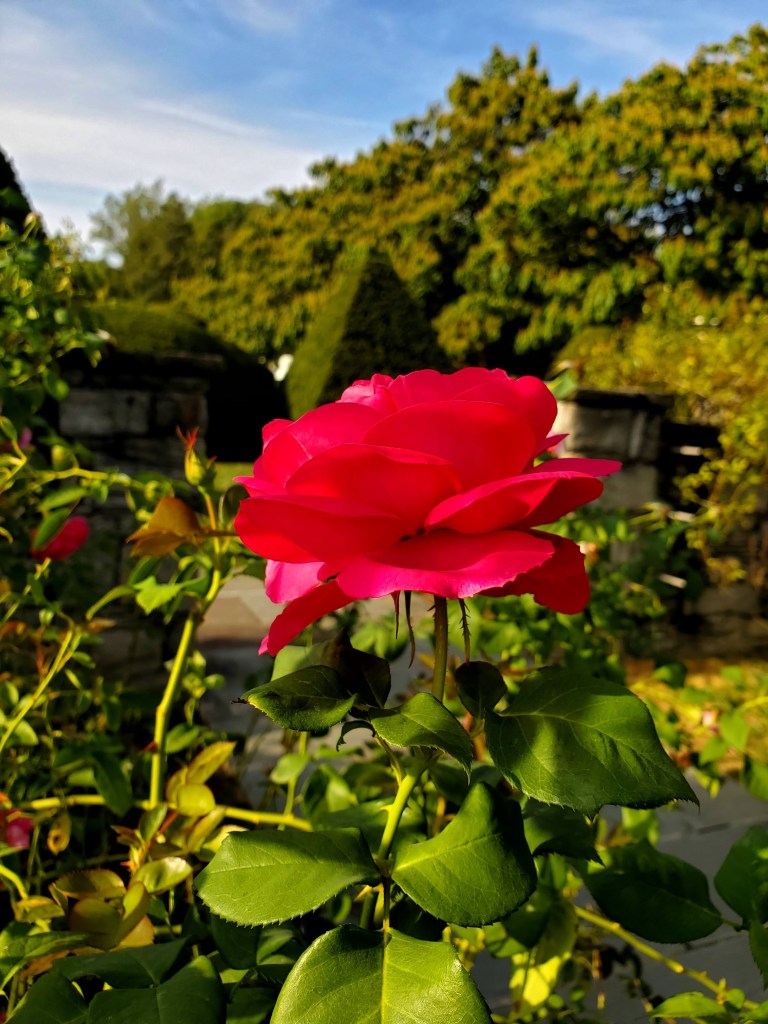
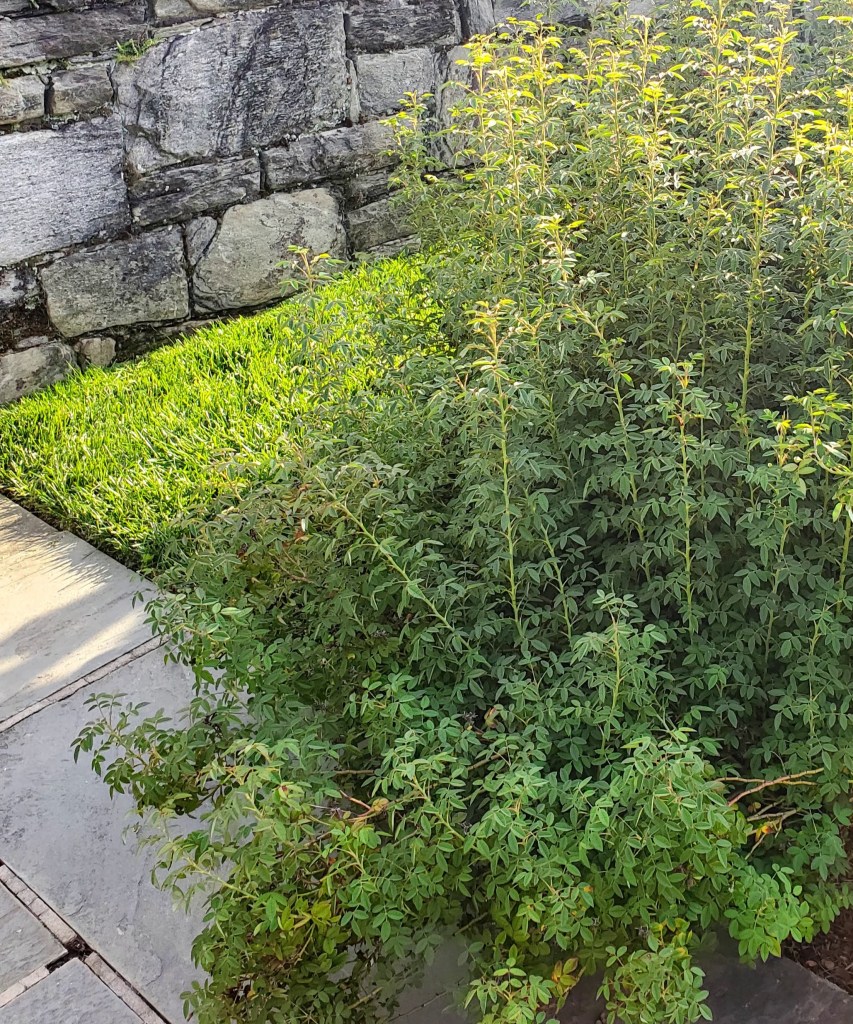

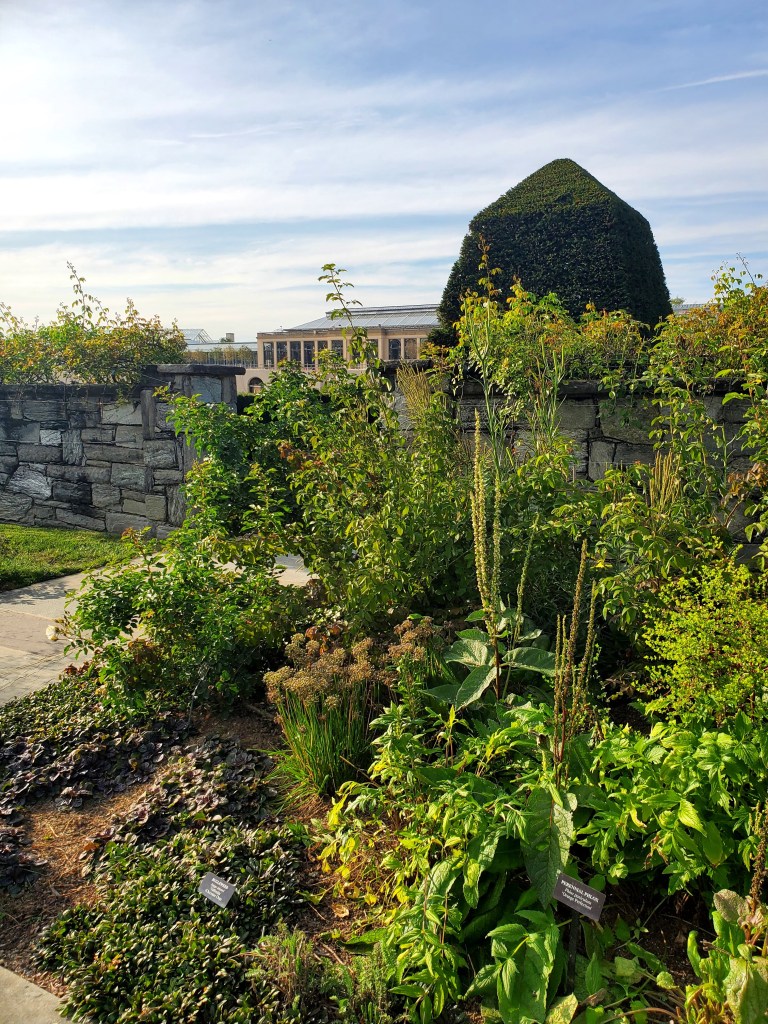
I dug our trajectory. I am not so sure about Beth! My favorite part, almost always in gardens, is to visit dear old friends, rediscovering places I have known.


The annuals at Longwood are literally perfection. I have no photos good enough to demonstrate this, so won’t try.
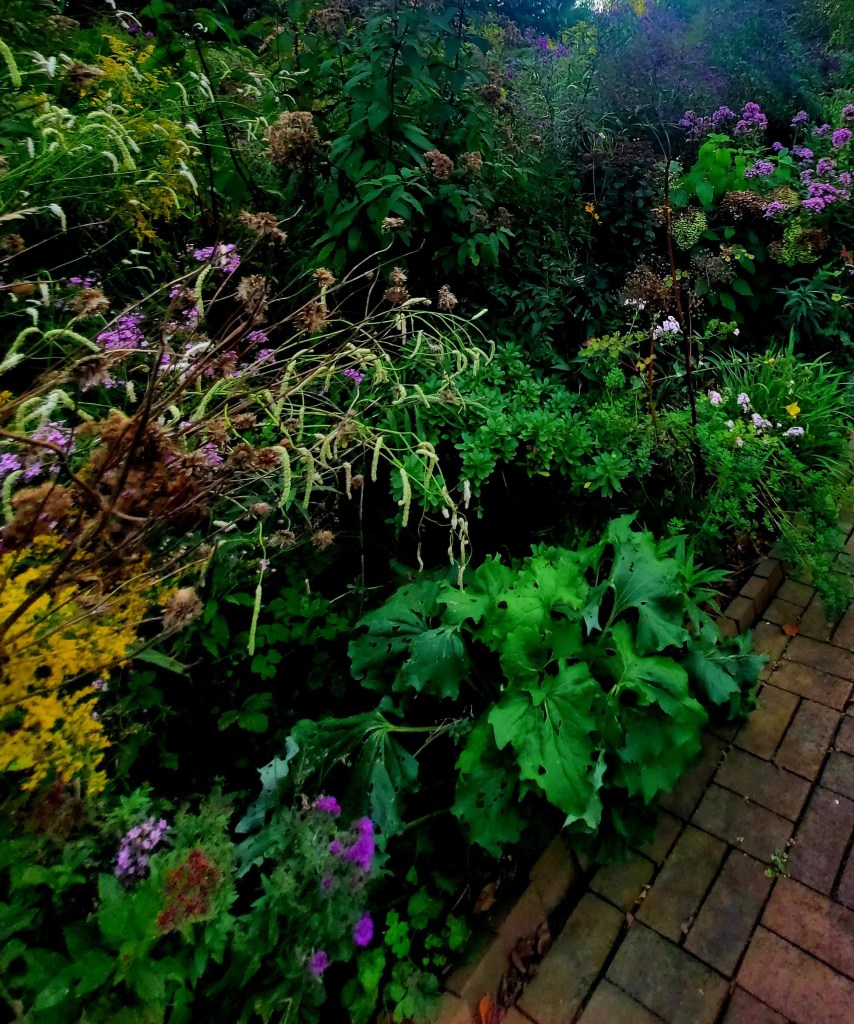
The perennials beds are inspired. The light was hard, bright, gorgeous for seeing in, impossible to photograph in. Most of my pictures did not turn out. I will NEVER fling again without a real camara!


The only disappointment was that I did not get to recreate my all time favorite picture of myself. Unfortunately, the water gardens were closed for renovations. I cannot wait to see them in 2024!
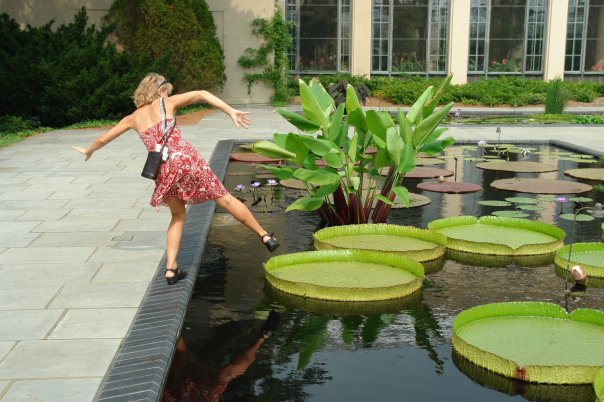
It may not look like it, but in the above photo, I was recovering from one of the most difficult times of my life, one of the most painful experiences I had ever known. Gardens exist for this: To make life bearable.
I love big old public gardens that are always asking for money, teeny public gardens on dead end streets, and nice plantings in the grocery store parking lot.
I have worked for 30 years in private gardens, but love public gardens–and their mission– with all my heart. They are democratic: of the people, by the people, for the people. Humans at their very best: Those who have every comfort that can be bought, sharing beauty with Everyone. We the people need them.
I need them.
I go to them to be inspired, to be educated, to heal. The gardens are public, but our experiences in them are intensely, deeply personal.
Places like Longwood are NECESSARY. The scale and capaciousness, the boundless resources, the excruciating beauty. Being in a garden as old and as storied as Longwood makes one feel more human, a part of history, a part of the natural world.
And we all should visit the conservatory in EVERY season!

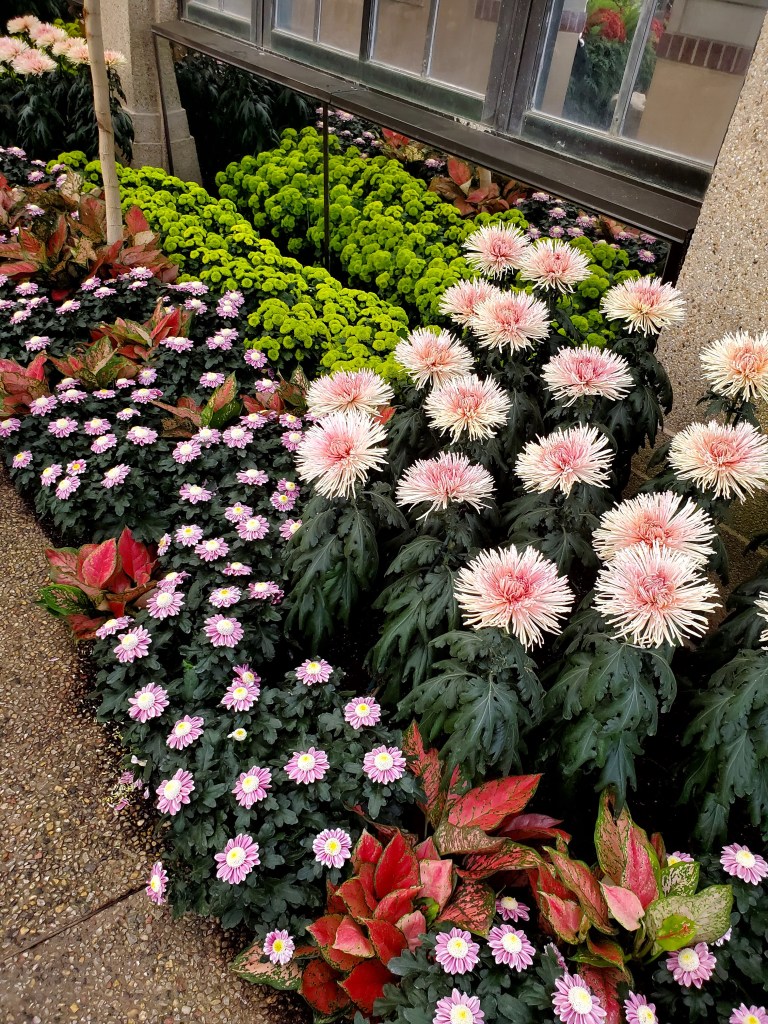


Our visit to Longwood continued with a delicious meal (Yes, I have recreated that mushroom dish. I used farro in mine. Does anyone remembers what it was called?), yummy beers, a live band–and a sundown lightshow.
I am not that good at sitting still, especially after such a stimulating day, so during the light show, I wandered the area, enjoying both the show and my last chance to walk around. I came upon and stood adjacent to a large group of people on electric scooters, having the time of their lives, apparently.
They were, it seemed, as giddy as I was. Because, you see, even though Longwood is as botanically sophisticated, as high-falutin, as exalted as a garden can be, it is also profoundly accessible, in every way. It makes space for everyone.
Thanks Longwood. Until we meet again!
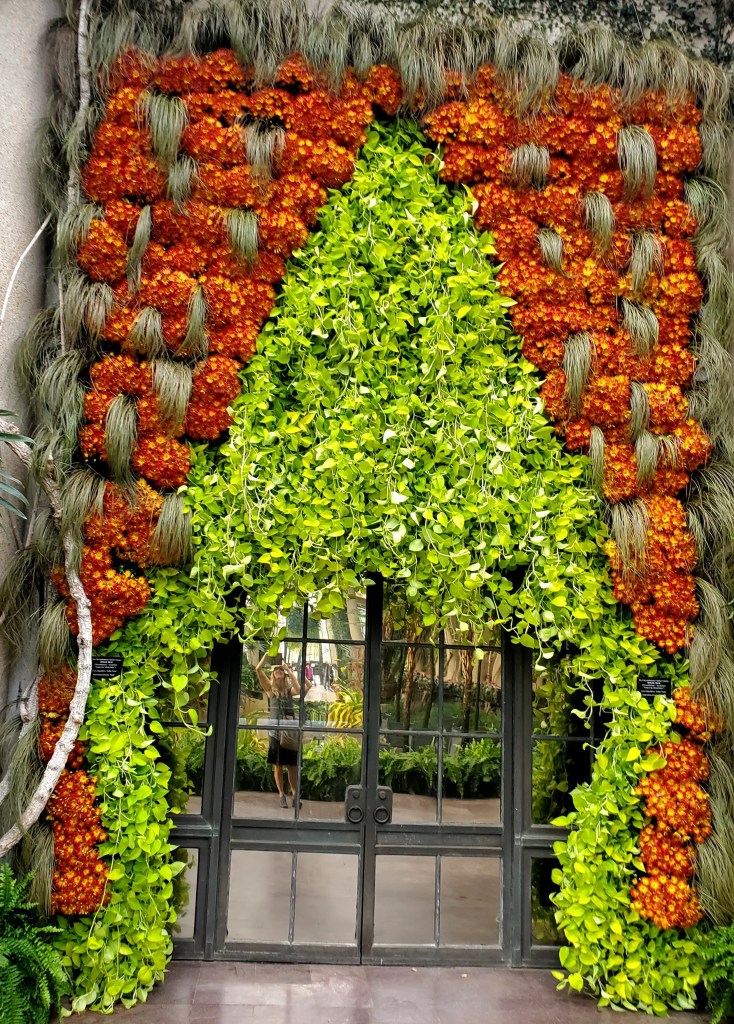
Thanks also to Karl– and every flinger– and every sponsor! #baileynurseries #chanticleergarden #cobrahead #crescentgarden #dramm #ealicata #gardenrant #thegreatgrowalong #monroviaplants #nwfs #northwestflowerandgardenfestival #picklewix #provenwinners #sandiaseed #stoneleighgarden #teakcloseouts

 Obsessed Midwest Gardener